On August 01 1983, a sudden heavy water leak from one of the 390 fuel channels of Reactor 2 at the Pickering Nuclear Generating Station (PNGS) was detected. The reactor, which had been operating with a remarkable reliability record for more than 12 years, was manually shut down and the problem was traced to channel G-16. (The reactor channels are designated alphabetically for their vertical position [row], and numerically for their horizontal position in that row.)
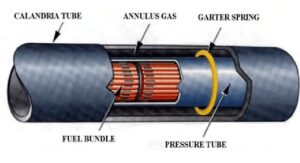
In a CANDU reactor each fuel channel consists of two major components. One of these is a thick-walled zirconium-alloy pressure tube that contains the fuel bundles (12 or 13 within each channel) and through which the hot and pressurized heavy water flows. The pressure tube is nested within a thin-walled calandria tube, outside of which lies the cooler moderator water. A dry gas(carbon dioxide)) in the annulus between the two long tubes is monitored for the presence of water, which would indicate a leak from either of the tubes. Over time the pressure tubes sag due to long-term creep under the weight of the fuel bundles, each weighing ~ 24 kg. To ensure the sagging does not allow the hot pressure tube to contact the cool calandria tube, at PNGS two coiled “garter” springs were strategically placed in the gap to maintain the spacing between the tubes.
After the fuel was removed from channel G-16, a remote camera revealed a 2.5 m long crack along the length of the pressure tube. Not only that, but the inspection showed that two fuel elements had separated from the fuel bundles and were jammed into the long crack.
The pressure tube was then cut in two and removed from the reactor for analysis. It was loaded into a special flask and transported to Chalk River where a team led by Brian Cheadle began a careful analysis in the NRU examination bays, and later in the Universal Cells.
The first conclusion reached from the inspections was that the fuel bundles were not the cause of the problems. Samples were then extracted from the pressure tube for careful metallurgical analyses. These tests showed that the cracks started at “blisters” on the outer surface of the pressure tube. Further detailed examinations revealed that the blisters consisted of relatively-brittle zirconium hydride.
The suspicion arose that the hot pressure tube had somehow come into contact with the colder calandria tube; the hydrogen migrating down a temperature gradient concentrated at these points forming the brittle zirconium hydride blisters.
The search then shifted to determining whether the garter springs, which were intended to maintain the gap between the pressure and calandria tubes, had shifted in position. Detailed analysis revealed that one of the garter springs had moved a distance of about one meter and allowed the hot sagging pressure tube to touch the cool calandria tube.
The original garter springs installed on the Pickering units were a loose fit on the pressure tube and a tight fit against the calandria tube. They tended to shift with microvibrations during normal station operation. Following this analysis, the springs in future CANDU reactors, which were increased from two to four per channel, were altered to form a tight fit on the pressure tube. That change, combined with the use of a new, zirconium-niobium alloy (which has a much smaller tendency to absorb hydrogen in the pressure tube than the Zircalloy originally installed) has resulted in no additional pressure ruptures throughout the entire CANDU fleet. In Canada alone this translates to ~ 400 GWe-years of safe operation over the past 41 years.
To learn more about pressure tubes and zirconium visit www.nuclearheritage.com/interviews and listen to the excellent interview with Brian Cheadle, AECL’s “Mr. Zirconium”. You can also arrange a visit at the Canadian Nuclear Heritage Museum at that website where you can see see a short, Chalk River generated, YouTube video entitled “The Trouble with G-16”. That video describes the G-16 failure and the detailed research it triggered to diagnose the cause.
